
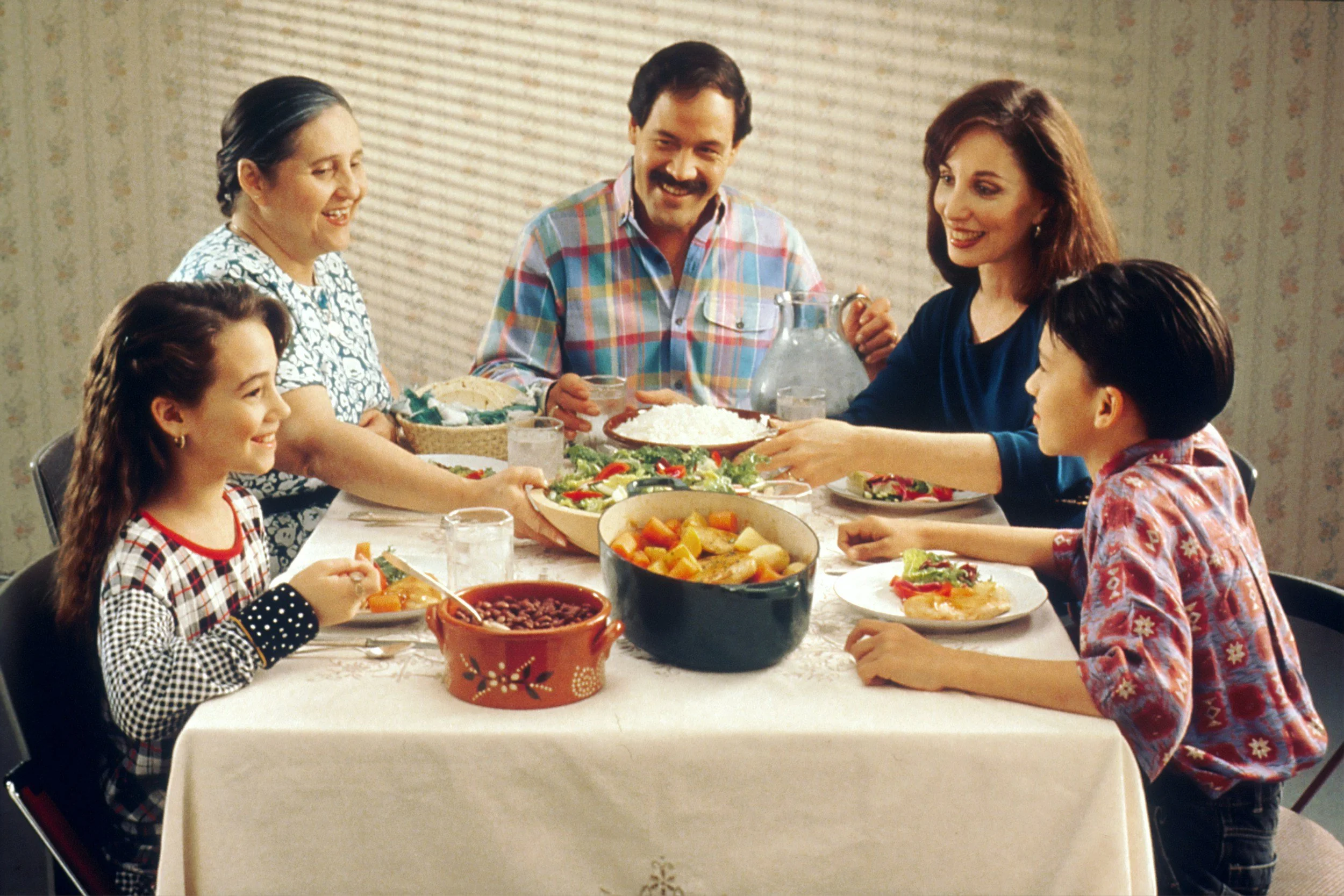
For many people, the holidays arrive with a quiet sense of dread. The decorations go up, the invitations arrive, and somewhere in the body a familiar tightening begins. If your family is a place where you have felt criticized, dismissed, or unsafe, a gathering that is supposed to feel warm can feel like walking back into a room where the old rules still apply.
If that is where you are, nothing is wrong with you. This guide offers grounded, compassionate ways to think about boundaries during the holiday season, including how to prepare, what to say, and how to care for yourself afterward. It is general information rather than clinical advice, and it is meant to support your choices, not to tell you what those choices must be.
Why Family Gatherings Press on Old Wounds
Families are our first teachers in how relationships work. Long before we could question it, we learned who we needed to be in order to stay safe and connected. When we return to the same table, the same house, or even the same group chat, those early lessons can switch back on without our permission.
Understanding why this happens can take some of the shame out of it. You are not being dramatic or oversensitive. Your nervous system is responding to a history, and it makes sense that it would respond strongly. A few patterns tend to show up again and again.
Old Roles Resurfacing
Many of us carry a role we were assigned as children: the peacemaker, the responsible one, the problem, the invisible one. Within minutes of walking in the door, you may find yourself slipping back into that part, even if you have grown well beyond it. Noticing the role is often the first step toward choosing something different.
Family systems tend to pull everyone toward familiar positions, which is one reason a single change can ripple outward. If you want to explore that idea further, this piece on how one change affects everyone in a family system may be a useful companion.
Bodies That Remember
Trauma is not only a story we tell. It also lives in sensation: a clenched jaw, a held breath, a stomach that drops when a certain voice enters the room. These responses are automatic and protective, and they can arrive before a single difficult word is spoken.
Love and Obligation Tangled Together
Most people with difficult families also love them, or long to. In many cultures, showing up for family is not optional, and absence can carry real consequences. Holding both the love and the hurt at once is one of the hardest parts of this season.
Together, these threads explain why a few hours at a holiday table can take days to recover from. They also point toward what helps: preparation, language, and permission.
What a Boundary Actually Is
A boundary is often misunderstood as a wall, a punishment, or an ultimatum. In practice, a boundary is simply a description of what you will do to stay well. "I will leave if the conversation turns to my weight" is a boundary. "You must stop commenting on my life" is a request, and requests depend on someone else's cooperation. Boundaries live in your own actions, which is exactly why they are within your reach.
It is also worth saying that boundaries look different across cultures and families. For some, a boundary might mean skipping the gathering entirely. For others, it might mean attending for ninety minutes, staying near a trusted cousin, or taking a walk between courses. There is no single correct version. If you are learning how to say no without guilt, this reflection on the art of saying no when setting boundaries explores that skill in more depth.
Five Ways to Prepare Before You Go
Preparation will not make a hard gathering easy, but it can make it more manageable. The goal is not to control other people. It is to give yourself more options in the moment than you would otherwise have. Here are five steps many people find helpful.
1. Decide What You Are Actually Agreeing To
Before you accept or decline, pause and ask yourself what you want, separate from what you feel you should do. You might say yes to dinner but no to staying overnight. You might say yes to a phone call but no to an in-person visit this year. Partial attendance is a legitimate choice.
Write your answer down if that helps. When pressure arrives, a plan you made in a calm moment is easier to return to than a decision you have to invent on the spot.
2. Name Your Triggers in Advance
Think about which topics, people, or situations tend to hurt most. Perhaps it is questions about relationships, remarks about your body, political arguments, or a relative who drinks. Naming them ahead of time takes away some of their surprise.
Once you know what to expect, you can plan a response. That might be a change of subject, a trip to the kitchen, or a quiet exit to the porch.
3. Build an Exit and a Landing
An exit is how you leave a moment or the whole event: your own transportation, a reason you can share, a time you have decided on. A landing is where you go afterward, whether that is a friend who understands, a quiet evening, or a scheduled session with your therapist.
Having both turns the gathering from something you must endure into something you chose, with an end point you control.
4. Practice a Grounding Skill
When the body is activated, reasoning gets harder. A short grounding practice can help you stay present enough to use your plan. Feeling your feet on the floor, slowing your exhale, or naming five things you can see are simple places to start. You can find more ideas in this collection of grounding techniques for managing trauma triggers.
5. Line Up One Safe Person
If possible, identify one person at the gathering or on your phone who knows what you are navigating. It might be a sibling, a partner, or a friend you can text. Simply knowing someone is on your side can soften the isolation that often makes these gatherings so exhausting.
None of these steps requires perfection. Even one or two can change how the day feels.
Scripts You Can Borrow
It is hard to find the right words when your heart is racing, so having a few phrases ready can help. The aim is to be clear and kind without over-explaining. You do not owe anyone a full account of your history in order to protect your peace.
Adapt these to fit your own voice and your family's way of speaking:
Redirecting a painful topic: "I am not going to discuss that today. How is the new house coming along?"
Declining an invitation: "Thank you for inviting me. I will not be able to make it this year, and I hope you have a lovely day."
Setting a time limit: "I can stay until about four. I am looking forward to seeing everyone."
Leaving a heated moment: "I need a little air. I will be back in a few minutes," or simply, "I am going to head out now."
Responding to pressure: "I know this is disappointing. I have made my decision, and I hope we can talk again soon."
If a script feels too blunt for your family, soften it. If it feels too soft, sharpen it. What matters is that the words are ones you can actually say.
Caring for Yourself During and After
Even with good preparation, you may feel drained, tearful, or on edge when the day is done. That is a natural response to an emotionally demanding experience, and it does not mean you handled it badly. Give yourself room to rest, to eat something nourishing, and to let your body settle without demanding an immediate explanation of how you feel.
You may also feel grief or guilt after setting a boundary, even a gentle one. Both can be present alongside relief. If you are in an unsafe situation, or if the stress of the season brings thoughts of harming yourself, please reach out for immediate help by calling or texting 988 in the United States, or by contacting local emergency services. You deserve support, and you do not have to carry this alone.
You Are Allowed to Choose Your Own Pace
Healing does not require a perfect holiday, and it does not require you to cut off or stay connected in any particular way. It asks for honesty with yourself and, over time, for relationships where your needs are treated as real. Whatever you decide this season, a thoughtful boundary is an act of care, both for yourself and for the relationships you hope to preserve.
If the holidays stir up more than you want to manage on your own, support is available. The Center's culturally aware, humanistic approach honors both your heritage and your healing, and individual therapy can offer a steady place to sort through family patterns at your own pace. When you are ready, you can reach out to the Center to take a first step.
Remember, you don't have to navigate life's challenges alone—healing and growth are possible with the right support. Reach out to the Center for Healing & Personal Growth today to discover how our trauma-informed, heart-centered approach can help you thrive.
